


























Key takeaways:
-
Science-backed fasting approaches like intermittent fasting (IF) and Prolon’s 5-Day Fasting Mimicking Diet (FMD) can help support healthy metabolic markers, fat loss, and long-term vitality in women over 50.
-
Menopause-related abdominal weight gain is often linked to changes in estrogen and insulin signaling, which fasting can help address at a metabolic level.
-
Research-backed programs like the FMD work to trigger key longevity pathways such as autophagy while helping protect lean muscle mass.
-
Consistency, hydration, and getting adequate protein intake during feeding windows, are essential priorities for fasting safely and effectively during your 50s and beyond.
As women move through perimenopause and menopause, hormonal changes can affect metabolism, energy, and body composition. Around age 50, many begin to notice that the strategies that once moved the needle on weight and energy levels no longer work the same way.
This shift has led to growing interest in fasting for women over 50. Research suggests that structured approaches—like intermittent fasting and prolonged fasting cycles—can help support metabolic health, energy levels, and healthy aging during the menopausal transition.
In this article, we’ll look at how fasting affects the body during menopause, separate myths from evidence, and outline science-informed ways women over 50 can use fasting to support their health.
What should women over 50 know about fasting?
Fasting can be an effective strategy for supporting weight management and overall health after 50—but the way fasting is practiced matters. During perimenopause and menopause, hormonal changes can affect insulin sensitivity, metabolism, energy levels, and muscle. Because of this, fasting strategies for women over 50 should prioritize nutrient density, muscle protection, and structured guidance rather than extreme calorie restriction.
One common myth is that fasting becomes riskier with age. In reality, the issue is less about fasting itself but how it’s practiced. Highly restrictive diets or prolonged nutrient deprivation can place unnecessary stress on the body, especially during and after menopause when muscle maintenance and hormonal balance are essential. By contrast, science-based approaches that stabilize blood sugar and provide carefully structured nutrition can support metabolic health, including insulin sensitivity and balanced energy levels. The 5-Day Fasting Mimicking Diet (FMD) is designed with this in mind, providing a scientifically designed daily nutrition plan that includes key nutrients while keeping the body in a fasting state—supporting metabolic reset without complete food deprivation.
Another misconception is that fasting inevitably leads to muscle loss. This is an important concern for women over 50, since declining estrogen levels can make maintaining lean muscle mass more challenging. However, research shows that Prolon’s FMD supports fat loss while helping protect lean muscle mass - an outcome that becomes increasingly valuable as the body ages.
Fasting supports processes that can decline with age—like insulin sensitivity—while helping the body clear out damaged cells. Prolonged fasting cycles like the FMD can work to lower insulin levels, give the body a break from constant nutrient intake and activate autophagy, a key cellular cleanout and renewal process that supports healthy aging. In fact, in a recent study, Prolon’s FMD was found to be the only nutrition program shown to trigger autophagy in humans.
Can fasting help with menopause weight gain?
Yes, fasting can be a helpful strategy for managing weight gain during menopause, a time when it can feel more challenging than ever to maintain what was once the status quo.
Many women notice that after age 50, the habits that once helped maintain their weight—cutting calories, exercising more, or following traditional diets—no longer deliver the same results. During perimenopause and menopause, hormonal shifts create a different metabolic environment, making weight management more challenging even when lifestyle habits stay the same.
One reason for this shift is the changing relationship between estrogen and insulin. Estrogen helps cells respond efficiently to insulin, the hormone that regulates blood sugar and energy storage. As estrogen levels decline during menopause, insulin levels can rise and the body becomes more likely to store energy as fat—particularly around the midsection. Over time, this shift can make the metabolism feel less responsive and contribute to the abdominal weight gain many women notice after menopause.
At the same time, highly restrictive dieting can backfire. Severe calorie restriction may increase stress hormones like cortisol, which are associated with greater abdominal fat storage as well as disruptions in sleep, mood, and energy. For menopausal women, this stress response can work against metabolic health, making traditional dieting both frustrating and difficult to sustain.
Fasting approaches the problem differently by addressing some of the underlying metabolic drivers of menopause-related weight gain. Structured fasting strategies—including intermittent fasting and longer fasting cycles like the FMD—can help lower insulin levels and give the body time to access stored energy. As insulin decreases, the body becomes more efficient at burning stored fat rather than relying only on incoming calories.
As naturopathic physician Dr. Sharon Stills explains, “Fasting boosts metabolism and promotes fat burning, helping to counteract menopause-related weight gain. By reducing insulin resistance, fasting also helps regulate blood sugar levels, further aiding in weight control.”
By working with the body’s changing biology rather than against it, fasting may help women navigate menopause-related weight changes with greater metabolic resilience.
What’s the best fasting method for women over 50?
The ideal fasting strategy for women after 50 focuses on balance rather than restriction. Approaches that support metabolic flexibility, stable energy, and proper nourishment tend to be the most effective and sustainable.
-
Intermittent Fasting (IF)
For many women over 50, a gentle form of intermittent fasting can provide structure without adding unnecessary stress to the body. A simple 12:12 schedule, where meals are eaten within a 12 hour daytime window aligned with natural circadian rhythms, is often a supportive starting point. This approach may help regulate blood sugar patterns and support metabolic health while still allowing for consistent nourishment. Nutrient-dense options such as Prolon’s Fasting Bars or Fasting Shake help maintain energy and provide key nutrients during fasting windows.
Other methods of IF include the 16:8 method (fasting for 16 hours and eating within an 8-hour window). Dr. Stills notes that this is “effective for weight management and metabolic health, while the 5:2 method (eating normally for five days and reducing calorie intake to 500-600 calories for two days) provides another option that can be less restrictive.”
-
5-Day FMD
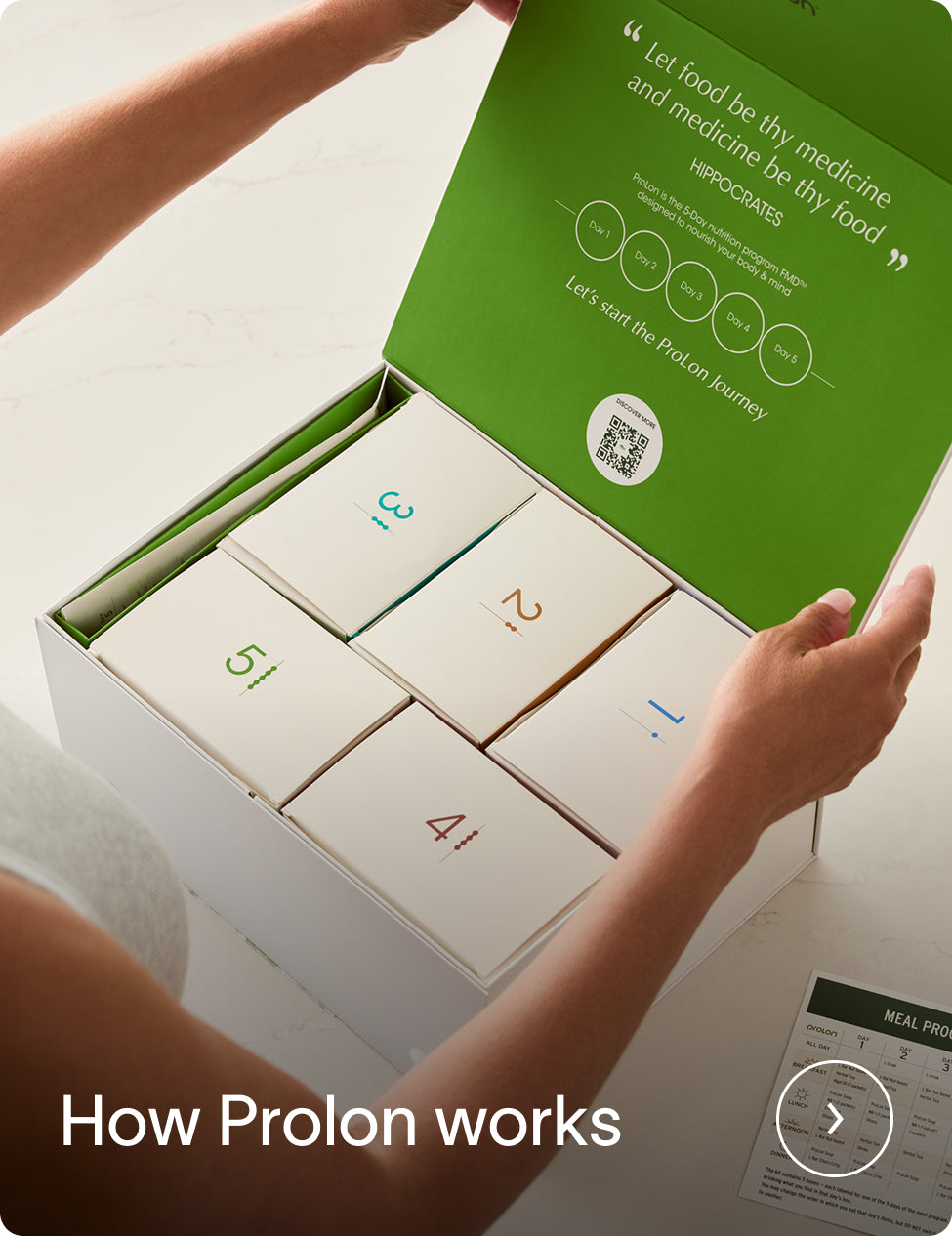
Periodic, yearly cycles of prolonged fasts of 72 hours or more allow the body to enter into autophagy, a biological process linked to longevity. However, going that long without food can be dangerous and difficult to sustain. The FMD was designed to allow the body to maintain a fasting state while still getting nourishment, offering an easy-to-follow plan with each day’s nutrition prepacked and ready to go. Backed by decades of research, the plan is designed using specific nutrient ratios—and it’s the only nutrition program clinically shown to trigger autophagy in humans.
Tips on how to fast safely as a woman age 50 and over
-
Prioritize protein in between fasting cycles
After 50, protecting lean muscle becomes essential for metabolism, strength and long-term mobility. Focus on high-quality, plant-based protein during eating windows to support muscle mass and healthy aging. Experts suggest that women over 50 aim for roughly 1.2 - 1.6 grams of protein per kilogram of body weight per day to help maintain muscle, though individual needs may vary. For example, if you’re 150 lbs (about 68 kg), that’s roughly 80–110 grams of protein per day—ideally starting with a higher-protein meal in the morning to support muscle and metabolic health. -
Stay hydrated and support electrolyte balance
Adequate hydration is key when fasting. Drinking enough water and maintaining electrolyte balance can help reduce common symptoms like headache or dizziness (sometimes called the “fasting flu”) while also supporting energy levels and mental clarity throughout fasting cycles. -
Choose consistency over intensity
Sustainable fasting routines tend to be more beneficial than extreme or irregular restriction. Incorporating 12:12 or 5:2 intermittent fasting routines, and/or quarterly FMD cycles, can provide a steady, repeatable rhythm that supports better long-term results than short-term, quick-fix approaches.
Empowering your second act
Fasting can be a powerful ally for women navigating the transitions of perimenopause, menopause, and post-menopause, helping to support metabolic health, weight management and healthy aging as hormones shift and metabolism changes. Instead of fighting against your body’s changing biology, fasting offers a way to work with it, empowering you with more control. The most important step is choosing a science-backed plan you can trust and sustain. If you’re ready to support your next chapter with the breakthrough longevity science behind fasting, we’re ready to help you get started.
Fasting over 50: FAQs
Is fasting safe for women over 50?
Yes, fasting can be safe and beneficial for many women over 50. The key is choosing a structured, science-backed plan that prioritizes muscle health, hydration, and overall nutrition. Women with underlying medical conditions or those taking medications should always consult a healthcare professional before starting any new nutrition or health routine.
What’s the best fasting method for women over 50?
There is no single best fasting method for everyone. Many women benefit from the routine of daily intermittent fasting while others may prefer to commit to regular FMD cycles. The right approach should feel sustainable, supportive and aligned with your individual health goals.
Does fasting affect bone density?
When done responsibly and paired with adequate nutrition, fasting generally does not negatively impact bone health. Prioritizing protein intake, maintaining strength training habits and ensuring sufficient intake of key nutrients (like calcium and vitamin D) during eating periods can also support bone health for women over 50.
Can I do intermittent fasting if I am on HRT?
Because HRT can influence metabolism and hormone balance it’s important to discuss any new nutrition plans, like IF, with your healthcare provider.
How often should I use the Prolon 5-Day FMD?
How often you use the 5-Day FMD can depend on your personal goals and overall health status. Studies show that initially completing one cycle per month for three consecutive months can have powerful healthy aging and metabolic benefits, including reducing biological age by as much as 2.5 years. After this initial three month period, many choose to proceed with quarterly FMD cycles to sustain results. Talking to a healthcare professional or registered dietitian can help determine the best cadence for your needs.
Will fasting help with brain fog?
Some research suggests fasting may support brain health, and many women report improved focus and mental clarity after completing the FMD.
Sources:
Nature.com: Fasting-mimicking diet causes hepatic and blood markers changes
Nature.com: Fasting mimicking diet cycles versus a Mediterranean diet and cardiometabolic risk NIH.gov: Aging of the Musculoskeletal System: How the Loss of Estrogen Impacts Muscle Strength
NIH.gov: Intermittent fasting and bone health: a bone of contention?
NIH.gov: Stress-induced cortisol response and fat distribution in women
Springer.com: Effect of fasting-mimicking diet on markers of autophagy and metabolic health in human subjects
Stanford.edu: Protein Needs for Adults 50+


